
Area close to the edge (0 to 200 m)
Flat water, progressive depth, ideal for beginner lessons and first takeoffs. This is where radio corrections have the most effect.
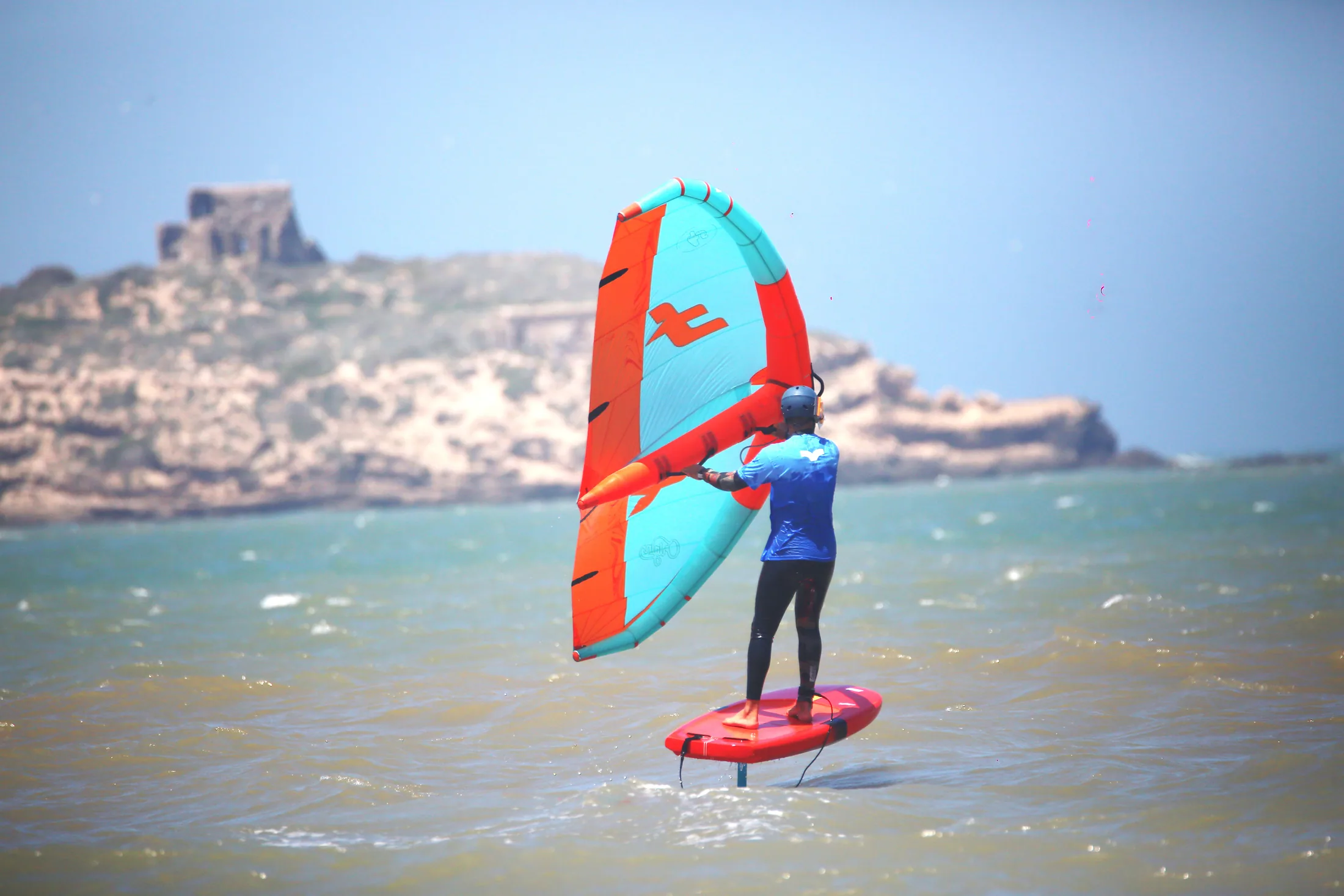
Understand the wingfoil areas in Essaouira: main bay, flat water, side-shore wind and options for independent riders.
Essaouira Bay is the logical starting point for learning wingfoil: side-shore wind, sandy bottom, area accessible from the beach and natural return to the edge if you lose ground. This is where all our courses are held, and for good reason.
The geography of the bay creates a rare situation: the wind blows parallel to the beach, which mechanically blows you back towards the edge if you stop sailing. No offshore wind, no current pulling you offshore. For a beginner, this is the most important passive safety one can have.
Beginners first work on the control of the wing, the position on the board and the first takeoffs in the area near the edge, where the water is flat and the depth progressive. More comfortable riders can then look for longer edges towards the middle of the bay, work on transitions and explore different angles depending on the exact direction of the day's wind.
Flat water, progressive depth, ideal for beginner lessons and first takeoffs. This is where radio corrections have the most effect.
A bit of chop depending on the strength of the wind. Good area to consolidate tacks and extend edges.
More exposed, some waves form when the wind is strong. For independent riders who want play in the waves or more technical edges.
The wind in Essaouira is thermal: it follows a fairly predictable daily cycle in high season.
Before 10 a.m., the wind is often still light to moderate (12-18 knots). This is the ideal window for beginners or to work on technique without being subjected to power. Between 10 a.m. and 1 p.m., the wind gradually increases (18-25 knots) - good session for all levels. From 1 p.m. to 5 p.m., it's the thermal peak: 25-35 knots in summer, powerful sessions for comfortable riders. After 5 p.m., the wind begins to die down and sunset sessions are often the most pleasant.
In practice: if Windguru announces 20 knots at 12 p.m., anticipate 25-28 knots at peak. The forecast slightly underestimates the local wind.
Practical for the first hours, waterstart and radio corrections. This is the school zone par excellence.
The trade winds often blow from April to October, with the best compromises in June and September. Wind between 20 and 30 knots most days in high season.
The sandy bottom is reassuring and allows you to progress peacefully. In the event of a fall, you do not have to worry about injuring yourself on submerged structures.
The bay is shared between wingfoilers, kitesurfers, surfers and swimmers. Keep your distance, announce your changes of direction and never fly too low over busy areas.
To our knowledge, this is not a subject on the Bay of Essaouira. Jellyfish may appear occasionally in summer: they are generally not a major problem, but if you see a lot of them, avoid staying in the water unnecessarily.
A few fishing boats pass in the bay, but no heavy maritime traffic. Keep an eye out, it's not a major risk.
For an experienced rider, yes with basic precautions. For someone who is not yet familiar with local conditions, a first session with a local instructor is highly recommended.
There are no legally prohibited areas in the bay, but common sense areas: stay away from swimmers, lesson areas and other riders.
Booking@seagullessaouira.com
Google Reviews · Seagull Club Essaouira
A few reviews left after kitesurfing, surf and wingfoil lessons with the team.
Le module de réservation ne s'affiche pas ici.
Kitehub peut bloquer l'affichage dans une fenêtre intégrée selon le navigateur. La réservation reste disponible dans un onglet sécurisé.
Ouvrir la réservation